
Screen Time vs Green Time: Balancing Summer Fun
Watch this episode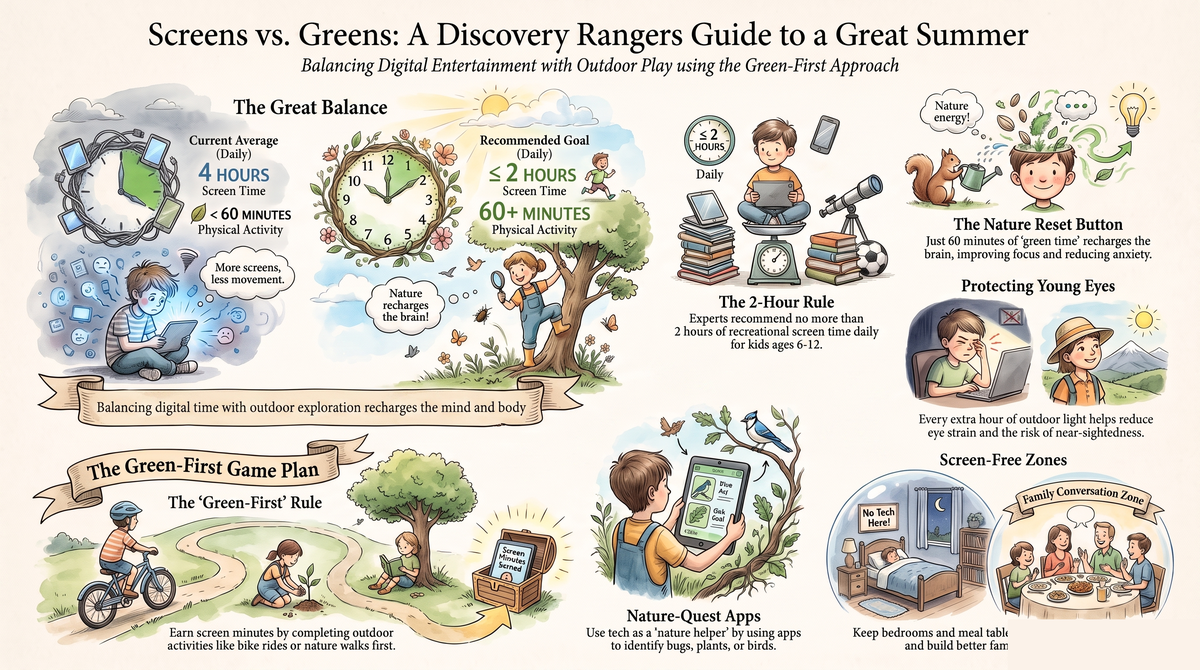
Did you know that playing outside in nature can actually help kids focus better in school? It sounds a little backward, doesn't it? We often think of quiet, focused time happening indoors with books or screens. But as summer break rolls around, giving kids lots of free time, it’s a perfect moment to think about how they’re spending those precious hours. It’s all about finding that sweet spot between tapping on a tablet and tromping through the trees.
1. The Summer Break Puzzle
School’s out! For many families, this means a sudden abundance of unscheduled time. Suddenly, kids have hours and hours stretching before them, and parents might find themselves wondering: "What's the best way for them to fill it?" The age-old question often pops up: should the summer be filled with video games and educational apps, or with adventures in the backyard and beyond? This is the heart of the "screen time versus green time" discussion. It’s not about picking one over the other, but about finding a healthy mix that keeps everyone happy and growing.
2. What Exactly is Screen Time?
Let’s get this clear: "screen time" isn't just about zoning out in front of the TV. It's any activity where your child is looking at a digital screen. Think video games, scrolling through kid-friendly websites, watching cartoons or educational videos, using learning apps on a tablet, or even talking to Grandma on a video call. Technology is a huge part of our world, and screens can be fantastic tools! They can unlock new ways to learn, let kids connect with friends and family who live far away, and offer up some seriously fun and creative games.
Fun Fact: Some educational apps are designed to adapt to your child's learning pace, offering challenges that are just right for them, kind of like a personal tutor in your pocket!
3. The Amazing Powers of Green Time
Now, let's talk about "green time." This is your child's time spent outdoors, especially when they’re immersed in nature. It’s more than just kicking a soccer ball around the yard, though that counts too! Green time can be exploring a local park, going for a family hike, helping in the garden, building a fort in the woods, or even just lying on the grass and watching the clouds drift by.
And those "superpowers" we mentioned? They're real! Studies show that spending time in nature can boost a child's mood, making them feel happier and less stressed. It can also improve their ability to concentrate and pay attention, pretty handy when school starts again! Plus, all that running, jumping, climbing, and exploring naturally makes their bodies stronger and healthier.
Fun Fact: Even a short walk in a park can lower stress hormones in children, helping them feel calmer and more relaxed.
4. Finding Your Family's Balance
So, how do you figure out the right balance for your family? There’s no single magic number that works for everyone. It depends on your kids’ ages, their interests, and your family’s schedule. The key is to be intentional. Instead of letting screen time or green time happen by default, try to plan for both.
Think about setting some general guidelines. Maybe it's "no screens for the first hour after waking up" or "outdoor play for at least one hour before dinner." You can also look for ways to blend the two! Use a nature app to identify a cool bug you find on your walk, or play a game that encourages kids to draw what they saw in the park.
Try This at Home: Create a "Nature Scavenger Hunt" list for your backyard or a local park. Include things like "a feather," "a smooth stone," "something red," "a fuzzy leaf," or "a spiderweb." It’s a fun way to get kids looking closely at the world around them.
5. Making Summer Memorable
Summer break is a fantastic opportunity for kids to learn, explore, and recharge. By thinking mindfully about how they spend their days, you can help them get the best of both worlds. Screen time can be a valuable tool for learning and connection, while green time offers incredible benefits for their physical and mental well-being. The goal isn't to eliminate screens or force hours of outdoor play, but to weave both into a summer that's rich with experiences, learning, and fun. What will your family discover this summer?
Frequently Asked Questions (FAQ)
Q: My child loves video games. How can I encourage them to play outside more? A: Start small! Instead of banning video games, try setting a time limit and then suggesting an outdoor activity. Make outdoor time fun by joining in, exploring a new park, or setting up a simple backyard adventure like a picnic or a fort.
Q: Is all screen time bad? A: Not at all! Educational apps, creative games, and video calls with family can all be really beneficial. The key is moderation and choosing high-quality content.
Q: My child has a tablet with educational games. Does that count as "good" screen time? A: Yes, interactive and educational screen time can be very valuable! It’s about the quality of the content and how it’s used. Pairing it with hands-on activities or discussions can enhance the learning experience even further.
Q: What if my child just doesn't seem interested in nature? A: Sometimes it just takes a little spark! Try visiting a local nature center, zoo, or botanical garden. Look for activities that might appeal to their specific interests, whether it's animals, bugs, plants, or just a cool place to explore.
Q: How much screen time is too much for a child? A: Experts suggest varying amounts based on age, but a good rule of thumb is to ensure it doesn’t interfere with sleep, physical activity, or other important daily routines like meals and homework. Prioritizing green time and other hands-on activities is also crucial.
The Ranger Field Mission
Run this after every episode to turn listening into something your child actually keeps. Do as many steps as they have energy for — even one counts.
- 1
Say it back
Before snacks or screens, ask your Ranger to teach you the one big idea — as if you'd never heard it.
- 2
Find it in the wild
Hunt for one real example of today's idea — in the kitchen, the yard, the sky, or the sidewalk. Point at it and name it.
- 3
Make something
Draw it, build it from what's on the table, act it out, or record a 20-second “Ranger report.” Making it forces real understanding.
- 4
Ask the next question
Finish with “What's one thing the episode didn't answer?” Stick it on the fridge — that's the start of the next adventure.
This article is part of Parenting With Purpose - free tools and companion guides that turn everyday moments into real learning. Explore the Discovery Rangers podcast kits, browse The Library, or build a calm weekly rhythm with The Sunday Plan.