
Beavers: Wetland Builders or Flood Nuisance?
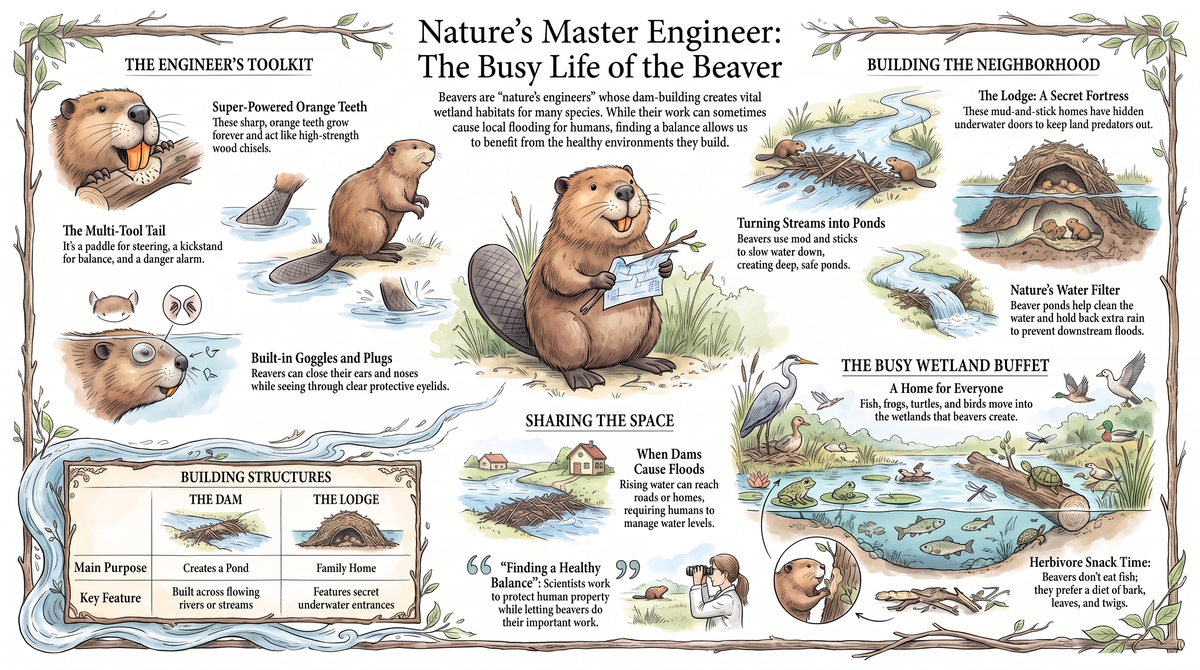
Did you know that a beaver's teeth grow so fast that if they didn't gnaw on wood, their teeth would grow right out of their skull? It sounds wild, but it's true! These incredible rodents are nature's architects, shaping entire landscapes with their powerful jaws and tireless work ethic. They're known for their amazing dams and cozy lodges, but sometimes their building projects can cause a bit of a stir.
1. Nature's Master Builders
Beavers are often called "ecosystem engineers," and for good reason! They're experts at using their bodies and the materials around them to build impressive structures. Their front teeth are like super-strong chisels, perfect for gnawing down trees. These trees are then dragged and dragged to the water's edge. Beavers also have flat, paddle-like tails that they use like a trowel to slap mud and sticks into place, creating sturdy dams and lodges. A lodge is their home, a cozy dome made of branches and mud, usually built in the middle of a pond.
Fun Fact: A beaver's tail isn't just for building; it's also used for swimming like a rudder, for balance when carrying branches, and even as an alarm system! When a beaver slaps its tail on the water, it's a loud warning to other beavers that danger might be near.
2. Dams That Make a Difference
The most famous beaver creation is the dam. Beavers build these across streams and rivers, slowing down the flow of water. When the water slows, it starts to back up behind the dam, creating a pond. This pond is super important for beavers. It gives them a safe place to live, away from hungry predators on land. It also makes it easier for them to get to their food, which is mostly plants like bark, leaves, and twigs.
3. Welcome to the Wetland!
Those beaver-made ponds are actually a type of wetland. What's a wetland? Think of it as an area where the ground is soaked with water, either all the time or for long stretches. Wetlands are some of the most important and busy places in nature. They're like nature's sponges, soaking up water and providing homes for tons of different plants and animals.
Try This at Home: Gather some small sticks, rocks, and mud. Find a shallow spot in a bathtub or a large bin filled with water. Try to build a small dam that holds back some of the water. What materials work best? How do you make it strong enough to resist the water flow?
4. A Haven for Wildlife
Beaver ponds aren't just for beavers! They create a whole new habitat that benefits many other creatures. The deeper water is perfect for fish. Frogs and turtles love to find food and hide among the plants that grow in and around the pond. Many kinds of birds visit to snack on insects and plants, and the open spaces created when beavers cut down trees allow sunlight to reach the forest floor, helping new plants to grow. It's like a bustling apartment complex where everyone benefits from the beaver's construction skills.
Fun Fact: Beavers have special adaptations that make them excellent swimmers and divers. They can close their nostrils and ears to keep water out, and a clear membrane over their eyes acts like built-in goggles!
5. When Building Causes a Flood
Now, sometimes beaver dams can cause problems for people. When a beaver builds a dam, the water level behind it rises. If that water starts to flood roads, fields, or even houses, people might start to see beavers as a nuisance. It's a tricky situation because the beavers are just doing what they naturally do, but their actions can have unintended consequences for humans. This is where the "flood nuisance" part of their reputation comes in.
6. Finding a Balance
People who study nature, like scientists and wildlife managers, try to find ways for humans and beavers to coexist. They understand that beavers are really good for the environment, creating those valuable wetlands. Sometimes, they might work to carefully manage the water levels behind beaver dams, perhaps by creating small channels to let some water flow through. Other times, they might focus on protecting areas that are at risk of flooding while still allowing beavers to build their homes and dams in other places. It's all about finding a balance between what nature needs and what people need.
Frequently Asked Questions (FAQ)
Q: Why do beavers build dams? A: Beavers build dams to slow down the flow of water and create ponds. These ponds provide them with a safe home, protect them from predators, and make it easier to access their food.
Q: Are beaver dams good for the environment? A: Yes, beaver dams are often very good for the environment! They create wetlands, which are important habitats for many plants and animals, help filter water, and can even help prevent floods by storing extra water.
Q: What do beavers eat? A: Beavers are herbivores, meaning they only eat plants. Their diet includes bark, leaves, twigs, roots, and aquatic plants.
Q: Can beavers swim underwater? A: Yes, beavers are excellent swimmers! They have adaptations like closable nostrils and ears, and a special membrane over their eyes that allow them to see and stay underwater for extended periods.
Q: What should I do if I see a beaver dam flooding my yard? A: If a beaver dam is causing flooding that is a problem, it's best to contact your local wildlife agency or conservation department. They can assess the situation and determine the best course of action to manage the water levels while respecting the beavers' role in the ecosystem.
The Ranger Field Mission
Run this after every episode to turn listening into something your child actually keeps. Do as many steps as they have energy for — even one counts.
- 1
Say it back
Before snacks or screens, ask your Ranger to teach you the one big idea — as if you'd never heard it.
- 2
Find it in the wild
Hunt for one real example of today's idea — in the kitchen, the yard, the sky, or the sidewalk. Point at it and name it.
- 3
Make something
Draw it, build it from what's on the table, act it out, or record a 20-second “Ranger report.” Making it forces real understanding.
- 4
Ask the next question
Finish with “What's one thing the episode didn't answer?” Stick it on the fridge — that's the start of the next adventure.
This article is part of Parenting With Purpose - free tools and companion guides that turn everyday moments into real learning. Explore the Discovery Rangers podcast kits, browse The Library, or build a calm weekly rhythm with The Sunday Plan.


