Backyard Splash Zones: Water Parks vs Natural Pools
Summer's here! Long days, bright sun, and all kids want to do is cool off. You might be thinking about turning your backyard into the ultimate summer spot. This article explores two cool backyard water ideas: the fun-packed backyard water park and the peaceful natural pool. Let's see what makes them special and how they help us beat the heat!
1. What Exactly Is a Backyard Water Park?
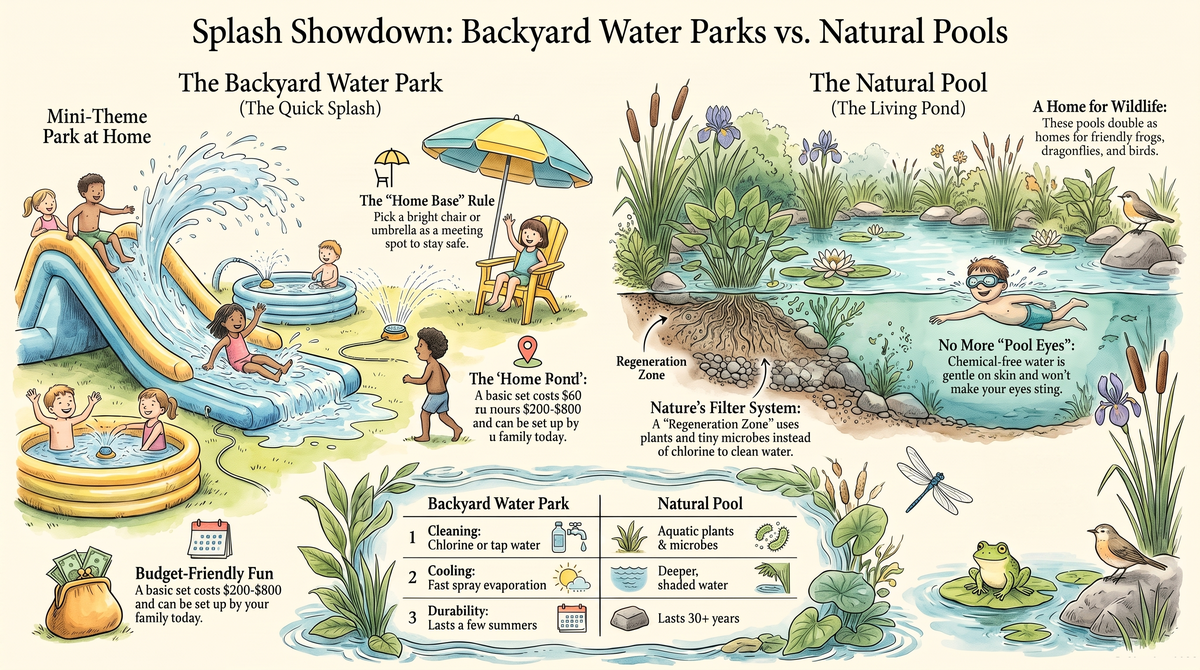
Picture this: your regular backyard becomes a mini-amusement park, all thanks to water! That's a backyard water park. It's not just one thing, but a bunch of cool water features that bring the excitement of a public water park right to your home.
Think about those awesome water toys and setups you might know:
- Slip-n-Slides: Remember those long, slick tarps you'd run and slide on? You can even make your own with a tarp, some dish soap, and a garden hose!
- Inflatable Pools: These are the smaller, portable pools that are super easy to set up and fill for a quick splash.
- Sprinklers and Splash Pads: These gadgets shoot out jets of water. Some even have fun things like tunnels that spray water when you push a button, perfect for running through!
- Water Slides: Usually made of plastic or metal, these end in a shallow pool, giving you a thrilling ride down.
Beyond the fun, these parks are great for cooling down. When water sprays or splashes on your skin and then evaporates (turns from liquid to gas), it takes heat away from your body. This is called the evaporation effect, and it's a super-fast way to feel instantly cooler.
Fun Fact: To keep everyone safe and accounted for, experts recommend setting up a clear "meeting point" in your backyard water park area, like a brightly colored chair or a shady umbrella. This helps kids know where to go if they get separated or just need a break!
2. Safety First: Keeping Water Park Fun Safe
While backyard water parks are all about fun, safety is always the top priority. Just like at a real water park, there are rules to follow to make sure everyone stays safe and healthy.
- Constant Supervision: This is the golden rule. An adult needs to be watching every child, at all times, when they are playing in or around water.
- Height Rules: Just like on big slides, many backyard slides have minimum height requirements. Make sure your child meets the rule before they take a ride.
- Water Shoes: Wet surfaces can be slippery! Wearing water shoes with good grip can help prevent slips and falls.
- Sun Protection: The sun is strong, especially when you're playing outside. Always apply a water-resistant sunscreen with SPF 30 or higher before playing and reapply it every two hours. Don't forget hats and sunglasses too!
- Stay Hydrated: It might seem like you can't get dehydrated when you're surrounded by water, but you can! Make sure everyone drinks plenty of water throughout the day.
3. What’s a Natural Pool, Anyway?
Now, let’s explore a different kind of backyard water feature: the natural pool. Imagine a small, beautiful pond that you can actually swim in! That’s essentially what a natural pool, also known as a natural swimming pond, is.
These pools are cleverly designed with two distinct zones:
- The Swim Zone: This is the clear, open area where you can swim and play.
- The Regeneration Zone: This is a shallower area, often filled with rocks, gravel, and beautiful aquatic plants. This zone is the secret sauce!
Instead of using chemicals like chlorine to keep the water clean, natural pools rely on something called biological filtration. This means that friendly tiny microbes and the roots of aquatic plants work together to break down any dirt or waste that gets into the water. It’s like nature’s very own water purification system!
Fun Fact: Because natural pools use plants and biological processes to clean the water, they are often gentle on the skin and eyes. Many people find the water feels softer, and they don't experience the itchy eyes that can sometimes come from chlorine.
4. The Benefits of Going Natural
Natural pools offer a unique set of advantages that make them a truly special addition to a backyard.
- No Harsh Chemicals: This is a big one! Without chlorine or other strong chemicals, your eyes and skin will thank you. No more stinging eyes or dry, itchy skin after a swim.
- A Haven for Wildlife: These pools can become mini-ecosystems. Frogs, dragonflies, and other beneficial insects can find a home around the edges, adding a touch of wild beauty to your yard.
- Energy Efficient: Natural pools often use special pumps that are designed to use less electricity, which is good for your energy bill and the planet.
- Long-Term Savings: While the initial setup might be an investment, you save money over time because you don't have to buy chemicals like chlorine.
- Year-Round Charm: Even when it's too cold to swim, a natural pool can be beautiful. In some climates, they can even freeze over and become a surface for ice skating in the winter!
5. Safety in Nature: Natural Pool Precautions
Just like any body of water, natural pools require safety measures, especially with children.
- Fencing: For younger children, a four-foot fence with a self-closing gate is a crucial safety feature. This helps prevent unsupervised access.
- Close Supervision: For children under five, adults should always stay within arm's reach, this is known as "touch supervision."
- Life Jackets: If your child is still learning to swim or if the pool has deeper areas, U.S. Coast Guard-approved life jackets are a must.
- Watch for Drains: While less common in natural pools than in traditional ones, it's always good practice to be aware of any drains and keep hair, jewelry, and toys away from them.
- Know the Depth: Teach your children to only swim in areas where they can touch the bottom. For deeper sections, life jackets are essential.
Try This at Home: Observe the plants in your backyard. Can you identify any that seem to thrive in damp or wet areas? What do you think their roots might be doing for the soil? You can even draw pictures of these plants and label them!
6. How Do They Keep Us Cool? Comparing Cooling Power
Both backyard water parks and natural pools are fantastic for cooling down, but they do it in slightly different ways.
- Evaporation Power: Backyard water parks excel at providing quick, intense cooling through lots of spraying and splashing. That rapid evaporation from the water hitting your skin is very effective. Natural pools also use evaporation from their large surface area, but it’s a gentler, more consistent cooling effect.
- Shade: Artificial shade structures like umbrellas and tents can be added to any water park setup. Natural pools get built-in shade from the plants in their regeneration zone, which helps keep the water temperature lower.
- Water Temperature: Water from a hose or tap is usually around 70-75°F. Natural pools, especially those that are deeper and shaded by plants, can often stay cooler.
- Materials: Plastic slides can get warm in the sun, which can make the water feel warmer. The stones and gravel used in natural pools absorb less heat, helping the water stay cooler.
So, which cools you more? A backyard water park might give you a thrilling, immediate cool-down with all the spraying action. A natural pool offers a more sustained, refreshing coolness, especially on the hottest days, thanks to its depth and natural shade.
7. Health and the Environment: A Closer Look
When we think about water play, it's also good to consider how these options affect our health and the environment.
- Chemical Exposure: As we've discussed, natural pools avoid chemicals like chlorine, which can sometimes cause skin irritation or eye discomfort. Backyard water parks, if they involve sprinklers or small pools that are chlorinated, might have some level of chemical exposure, though usually minimal and managed with proper care.
- Water Usage: Both options use water, but the way they use it differs. Sprinklers and slip-n-slides can sometimes use more water because it's constantly running or being replenished. Natural pools are designed to be more contained and rely on biological systems, potentially using water more efficiently over time.
- Environmental Impact: Natural pools are often seen as more eco-friendly because they support local wildlife, use less energy (with efficient pumps), and avoid chemical runoff into the environment. Backyard water parks, especially those with inflatable pools that need frequent refilling, might have a higher water usage footprint.
Ultimately, both backyard water parks and natural pools can provide endless summer fun. Whether you're looking for thrilling splashes or a peaceful dip, there's a way to create your perfect backyard water adventure!
Frequently Asked Questions (FAQ)
Q: Are natural pools safe for very young children who can't swim yet? A: Yes, but with the right precautions. For children under 5, "touch supervision" (an adult staying within arm's reach) is essential. Also, ensuring the pool has a safe entry and exit, and potentially life jackets for any deeper areas, is crucial. Fencing is also highly recommended to prevent unsupervised access.
Q: How much space do I need for a backyard water park or a natural pool? A: A backyard water park can be quite flexible; you can start with just a sprinkler and a small inflatable pool, or go bigger with a slip-n-slide and a small slide. Natural pools generally require more space, as they have distinct swim and regeneration zones, often needing at least a few hundred square feet to be effective and aesthetically pleasing.
Q: Do I need to constantly clean a natural pool? A: Natural pools are designed to be largely self-cleaning thanks to their biological filtration system. You'll need to do some maintenance, like occasionally removing excess plant material or debris, and ensuring the pumps are working correctly. It's generally less intensive than the daily chemical balancing and cleaning required for traditional chlorinated pools.
Q: Can I add water toys to a natural pool? A: Yes, you can add some water toys to the swim zone of a natural pool, just like you would in a regular pool. However, it's best to avoid toys that could easily break apart and add debris to the water. Also, be mindful of keeping toys away from the regeneration zone to allow the plants and microbes to do their work undisturbed.
Q: Which option is usually more expensive to set up? A: Generally, setting up a backyard water park with a few basic items like a sprinkler, inflatable pool, and a slip-n-slide can be less expensive initially than building a natural pool. Natural pools often involve more significant landscaping and construction, making their initial cost higher, though they can offer long-term savings on chemicals and energy.
Turn this into action, a hands-on, printable mission made for this episode.
The Ranger Field Mission
Run this after every episode to turn listening into something your child actually keeps. Do as many steps as they have energy for — even one counts.
- 1
Say it back
Before snacks or screens, ask your Ranger to teach you the one big idea — as if you'd never heard it.
- 2
Find it in the wild
Hunt for one real example of today's idea — in the kitchen, the yard, the sky, or the sidewalk. Point at it and name it.
- 3
Make something
Draw it, build it from what's on the table, act it out, or record a 20-second “Ranger report.” Making it forces real understanding.
- 4
Ask the next question
Finish with “What's one thing the episode didn't answer?” Stick it on the fridge — that's the start of the next adventure.
This article is part of Parenting With Purpose - free tools and companion guides that turn everyday moments into real learning. Explore the Discovery Rangers podcast kits, browse The Library, or build a calm weekly rhythm with The Sunday Plan.


