
Axolotls: The Little Dragons of the Lake
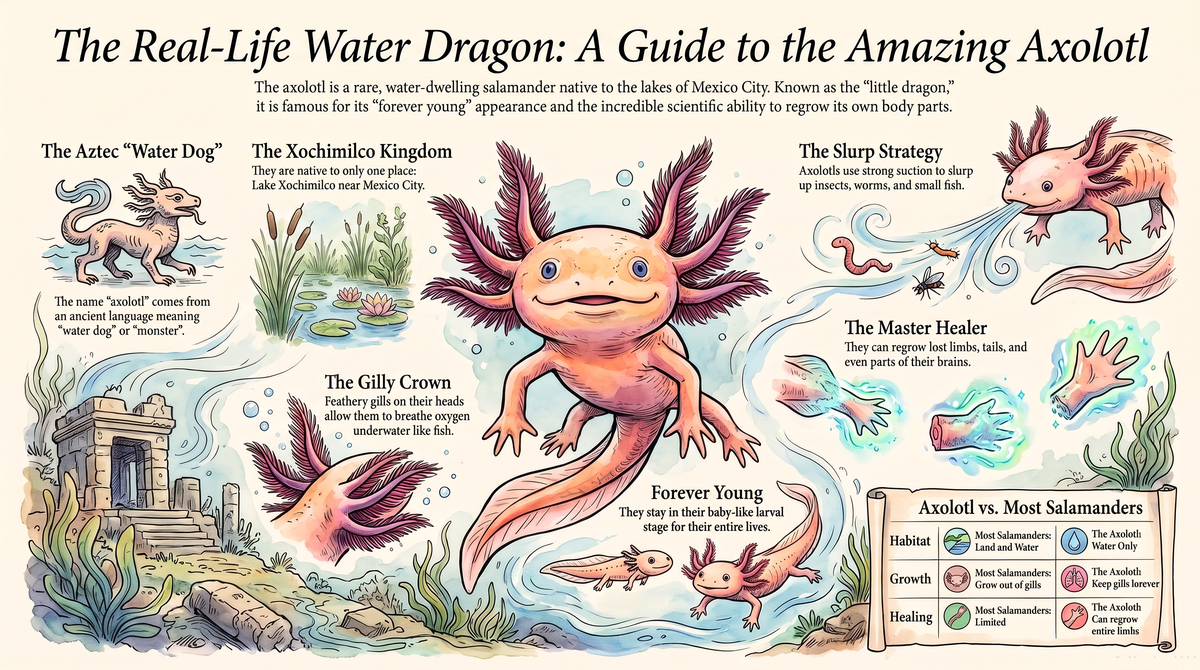
An axolotl can regrow its own leg, tail, or even a part of its brain or heart! Imagine losing a finger and having it grow back perfectly, good as new. That’s just one of the incredible superpowers of these unique creatures, often called the "little dragons of the lake." But despite their dragon-like name and mythical healing abilities, axolotls are very real, and they live in a very specific place on our planet.
1. What Exactly is an Axolotl?
So, what is this amazing animal? An axolotl is a type of salamander. Now, most salamanders are amphibians, meaning they can live on land and in water, like frogs. But axolotls are super special because they spend their entire lives in water. They’re like permanent water babies! This special condition is called "neoteny" (say: NEE-oh-ten-ee). It means they keep their baby-like features, like feathery external gills, even when they’re all grown up. They don't develop the lungs and stronger legs that other salamanders do to live on land. They just stay aquatic, looking perpetually like they’re in their larval stage.
Fun Fact: The name "axolotl" comes from an ancient language called Nahuatl, spoken by the Aztecs. It’s thought to mean "water dog" or "water monster," which is pretty cool!
2. Where Do These Little Dragons Live?
Axolotls aren't found just anywhere. They are native to only one place in the entire world: the ancient lake system near Mexico City, Mexico. Their primary home is a place called Lake Xochimilco. Think of it as their exclusive, watery kingdom.
Sadly, this special home is in trouble. Pollution is making the water dirty, and there isn’t always enough clean water for the axolotls to thrive. This is why they are considered critically endangered in the wild, meaning there are very few of them left in their natural habitat.
3. What Do Axolotls Look Like?
These creatures have a truly unique and, dare we say, adorable appearance. They have a wide, flat head with a mouth that always seems to be in a gentle smile. The most striking feature, though, is their set of feathery gills that stick out from the sides of their heads like a fancy headdress. These aren't just for show; they're how the axolotl breathes underwater, pulling oxygen right out of the water.
They have small, dark eyes that don't have eyelids, so they’re always wide open, taking in the underwater world. Their bodies are long and slender, with four legs that have little toes. Axolotls can come in a surprising variety of colors, from pale pink and white to black, and even spotted!
Fun Fact: Those feathery things sticking out from their heads are their gills! They use them to breathe underwater, much like fish use their gills.
4. What's on the Axolotl Menu?
Axolotls are carnivores, which means they eat meat. In their watery home, they hunt for small creatures to slurp up. Their diet in the wild includes things like:
- Insects and insect larvae
- Worms
- Small fish
- Tiny crustaceans (like little shrimp)
They have a powerful suction ability in their mouths. When they spot a tasty morsel, they can open their mouths wide and create a vacuum, slurping their food right in!
Try This at Home: You can explore how suction works! Fill a small cup with water. Try to use a straw to suck up a few small beads or pieces of cereal from the bottom of the cup. How does the suction pull them into the straw? You can also try to draw water into a syringe and then push it back out, noticing the pressure change.
5. The Axolotl's Superpower: Regeneration!
This is where axolotls really blow our minds. They have a superpower called regeneration. This means they can regrow lost body parts. If an axolotl loses a leg in an encounter or accident, it doesn't just heal; it grows a brand new, perfectly formed leg! It can also regrow its tail, its skin, and even parts of its jaw, heart, and brain.
Scientists are incredibly interested in axolotls because of this amazing ability. They are studying how axolotls do this. The hope is that understanding their regeneration process might one day help humans heal better from injuries or diseases. It’s like they hold secrets to natural healing that we are just beginning to understand.
6. Axolotls as Living Fossils
Axolotls are sometimes called "living fossils." This doesn't mean they are actually old fossils you'd find in a museum, but rather that they have changed very little over millions of years. They have survived and stayed pretty much the same while many other animals have evolved and changed dramatically. They offer a unique window into what ancient amphibians might have looked like.
7. Protecting Their Homes
Because axolotls only live in one specific place, Lake Xochimilco, it's crucial to protect their habitat. Pollution and the draining of wetlands for development have drastically reduced their numbers in the wild. Conservation efforts are underway to clean up the water and try to preserve what’s left of their natural home. This highlights a really important lesson: when an animal's home is threatened, the animal is threatened too.
Frequently Asked Questions (FAQ)
Q: Are axolotls the same as regular salamanders? A: Axolotls are a type of salamander, but they are special! Unlike most salamanders that can live on land, axolotls spend their entire lives in water and keep their baby-like features
Turn this into action, a hands-on, printable mission made for this episode.
The Ranger Field Mission
Run this after every episode to turn listening into something your child actually keeps. Do as many steps as they have energy for — even one counts.
- 1
Say it back
Before snacks or screens, ask your Ranger to teach you the one big idea — as if you'd never heard it.
- 2
Find it in the wild
Hunt for one real example of today's idea — in the kitchen, the yard, the sky, or the sidewalk. Point at it and name it.
- 3
Make something
Draw it, build it from what's on the table, act it out, or record a 20-second “Ranger report.” Making it forces real understanding.
- 4
Ask the next question
Finish with “What's one thing the episode didn't answer?” Stick it on the fridge — that's the start of the next adventure.
This article is part of Parenting With Purpose - free tools and companion guides that turn everyday moments into real learning. Explore the Discovery Rangers podcast kits, browse The Library, or build a calm weekly rhythm with The Sunday Plan.


